The Winning Month That Breaks Your Portfolio: Overconfidence and the Copy Trading Trap
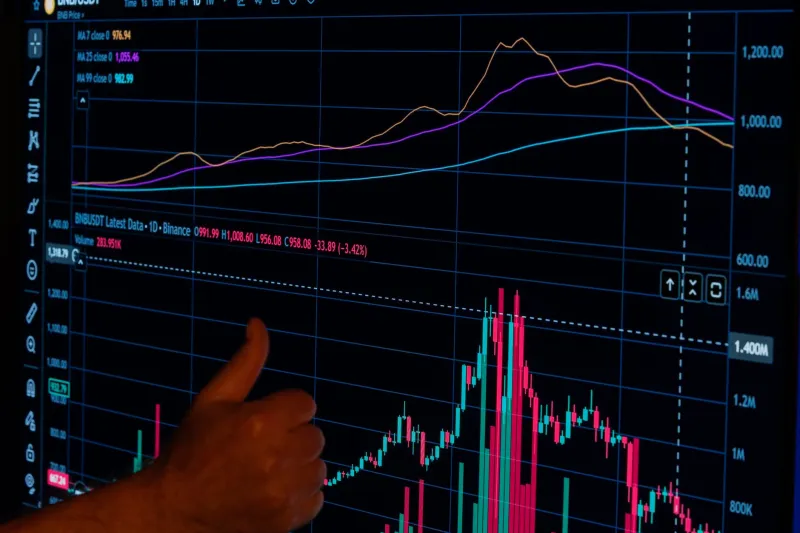
April closes, and your copy trading account is up 18 percent. Your master trader has delivered a return that would make most mutual fund managers quietly envious. You feel, understandably, a sense of momentum. Confidence is high. The logical next step, your instincts suggest, is to press the advantage—add capital, increase leverage, or perhaps swap in a higher-performing trader you have been watching from the sidelines.
This is precisely the moment when the data says you should be most cautious.
The Paradox at the Center of Strong Performance
Behavioral finance has documented for decades what practitioners experience but rarely articulate clearly: exceptional short-term returns are among the most reliable predictors of subsequent investor error—not because the returns themselves are illusory, but because of what they do to the human mind that observes them.
The pattern is well established in academic literature. Investors who experience strong recent performance consistently overestimate their ability to forecast future performance, underestimate risk, and make portfolio decisions with a confidence that the underlying evidence does not support. In traditional investing, this manifests as stock-picking overreach or market-timing attempts. In copy trading, it takes on a distinct and particularly dangerous character.
Call it the Garuda Paradox: the month your portfolio soars is frequently the month that plants the seeds of its most significant decline.
Why Copy Trading Amplifies the Effect
Conventional investors who outperform in a given month can attribute their success to a range of factors—security selection, sector allocation, timing, or simply favorable market conditions. That ambiguity, while frustrating, at least imposes some humility.
Copy traders face a different psychological dynamic. When a master trader delivers exceptional returns, the attribution is clear and personal: I chose this trader. That decision feels validated. The investor who selected this individual from among dozens of candidates receives a powerful psychological reward, reinforcing the belief that their selection process was not merely fortunate but genuinely skilled.
This attribution of skill to what may have been partly a favorable-variance outcome is the core of the overconfidence trap. And it drives three specific behaviors that consistently damage long-term returns.
The Three Post-Peak Mistakes
First: Capital infusion at the wrong moment. After a strong month, investors frequently add substantial new capital to the traders responsible for that performance. The timing is problematic on multiple levels. Strong performance periods often reflect market conditions that are transient—momentum phases, volatility spikes, or sector rotations that the master trader happened to be positioned well for. Adding capital after that condition has already expressed itself means buying into a strategy at a point of elevated valuation, in a sense, just as the favorable environment may be dissipating.
Second: Leverage escalation. Some copy trading platforms allow investors to apply multipliers to the positions their master traders take. After a winning month, the temptation to increase that multiplier is significant. The reasoning feels sound: if the trader just returned 18 percent at 1x leverage, imagine the potential at 1.5x. What this logic ignores is that leverage amplifies drawdowns with the same ruthless efficiency that it amplifies gains. The trader's next losing period—which is statistically inevitable—will arrive with magnified consequences for the over-leveraged follower.
Third: Trader-switching based on comparative envy. A strong month on your primary account often coincides with reviewing the leaderboards and noticing that another trader posted 25 percent or 30 percent returns over the same period. The instinct to redirect capital toward that higher performer is a textbook manifestation of performance chasing. Research across asset classes consistently shows that investors who switch to last period's winner underperform investors who maintain their original positions, even when the original positions were themselves unremarkable.
What the Data Actually Shows About Peak-Month Sequencing
Analysis of copy trading account behavior across multiple platforms reveals a consistent pattern. Accounts that experience their single best monthly return within a given year are statistically more likely to experience one of their three worst monthly returns in the subsequent quarter than in any other period. This is not because strong performance causes bad performance in any direct mechanical sense. It is because strong performance triggers the behavioral changes described above—changes that systematically increase risk exposure at precisely the moment when mean reversion is most likely to assert itself.
The trader has not changed. The strategy has not changed. What has changed is the investor's behavior in response to success.
Building a Post-Peak Protocol
The antidote to the Garuda Paradox is not pessimism about strong returns—it is a pre-committed decision framework that governs your behavior regardless of recent performance.
Consider establishing what might be called a cooling period rule: following any month in which your portfolio outperforms your long-term target return by more than a defined threshold, you impose a mandatory 30-day moratorium on any structural portfolio changes. No new capital additions beyond your regular scheduled contributions. No leverage adjustments. No trader switches.
This is not passive inaction. It is disciplined restraint—one of the most undervalued skills in any investment context.
Additionally, maintain a performance journal that records not just returns but the market conditions that accompanied them. When reviewing a strong month, force yourself to articulate what proportion of the gain was attributable to the master trader's skill versus the prevailing environment. This exercise does not diminish your returns, but it does calibrate your confidence more accurately.
The Compounding Advantage of Emotional Consistency
At Garuda Copy Trade, the most durable portfolio growth tends to belong not to investors who find the hottest trader at the right moment, but to those who maintain consistent behavior across both favorable and unfavorable periods. Compounding rewards patience and penalizes reactive decision-making with particular severity.
Your best month is worth celebrating. It is not worth betting against yourself in its aftermath.