The Invisible Tax: How Execution Lag and Price Slippage Quietly Erode Your Copy Trading Returns
For many retail investors, copy trading represents an elegant solution to a persistent problem: how do you benefit from professional-grade market expertise without spending years acquiring it yourself? Platforms that allow you to mirror master traders appear to close this gap entirely. Yet buried within the mechanics of trade replication lies a structural disadvantage that even experienced copy investors frequently overlook — one that can transform a master trader's winning position into a marginal or even losing one by the time it reaches your account.
That disadvantage has two names: execution lag and price slippage. Together, they function as an invisible tax on your returns, and understanding them is not optional for anyone serious about building wealth through copy trading.
What Execution Lag Actually Means in Practice
When a master trader places an order, their platform executes it at or near the quoted market price at that precise moment. The signal then travels through the copy trading infrastructure — servers process it, the platform identifies all copying accounts, and individual replication orders are generated and submitted. This chain of events takes time. Depending on the platform, network conditions, and trade volume, that delay can range from fractions of a second to several seconds or more.
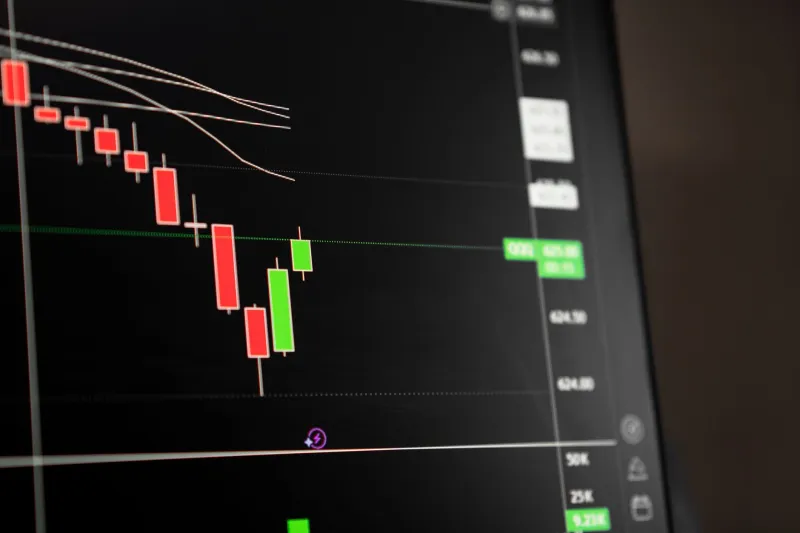
In calm, liquid markets, a two-second lag on a stock trade may be inconsequential. But in fast-moving markets — during an earnings release, a Federal Reserve announcement, or a sudden geopolitical development — prices can shift meaningfully in that window. The master trader entered at $102.40. By the time your copy order reaches the exchange, the ask has moved to $102.85. That forty-five-cent difference, multiplied across position size and repeated across dozens of trades over a year, compounds into a substantial drag on performance.
This is not a theoretical concern. Research into high-frequency trading environments consistently demonstrates that even millisecond-level delays alter fill prices in volatile conditions. Retail copy traders operate at a far longer lag than institutional participants, and that gap has real dollar consequences.
Why Institutional Traders Are Insulated From This Problem
Master traders on major copy platforms often operate with technological and structural advantages that retail followers simply cannot replicate. Many professional traders use direct market access, co-located servers, or algorithmic execution systems that fill orders with minimal delay and minimal market impact. Their order sizes, while sometimes large in absolute terms, are calibrated to the liquidity available at the moment of entry.
Retail copy followers, by contrast, arrive at the same trade after the initial move has already begun. Worse, when hundreds or thousands of accounts simultaneously submit the same trade signal, the aggregate order flow can itself push prices against the copiers. This phenomenon — sometimes called crowd slippage — is especially pronounced in less liquid instruments such as small-cap equities, certain currency pairs, or niche commodity contracts. The master trader's edge is, in part, a function of timing and scale that cannot be democratized through a copy button.
Recognizing the Hidden Cost in Your Own Account
Most copy investors evaluate a master trader's published performance record and assume their own returns will approximate that figure, minus platform fees. This assumption is flawed. A straightforward diagnostic is to compare your average entry and exit prices on copied trades against the prices recorded in the master trader's own account history, if the platform makes that data visible.
If you consistently enter at prices worse than the master's and exit at prices worse as well, you are experiencing compounding slippage on both sides of each trade. On a portfolio generating fifty round-trip trades per month, even a modest average slippage of fifteen cents per share can amount to hundreds or thousands of dollars annually — a silent reduction that never appears as a line-item fee but is no less real for its invisibility.
Practical Strategies to Reduce Slippage's Impact
While execution lag cannot be eliminated entirely within a copy trading framework, several approaches can meaningfully reduce its cost.
Prioritize liquid instruments. Slippage is a function of bid-ask spreads and market depth. Master traders who operate primarily in highly liquid markets — large-cap S&P 500 components, major currency pairs like EUR/USD, or actively traded ETFs — provide a more favorable environment for copy replication. Avoid copying traders whose strategies center on thinly traded assets, where the crowd effect of copy orders can be severe.
Evaluate platform execution architecture. Not all copy trading platforms are built equally. Before committing capital, investigate how a platform routes and batches copy orders. Some platforms aggregate follower orders and execute them as a block, which can reduce per-account impact but may worsen average fill prices. Others execute individually, which preserves some timing variation. Understanding this distinction informs your expectations.
Favor position traders over scalpers. A master trader whose average holding period is measured in days or weeks is structurally more copy-friendly than one who scalps for ten or twenty pips per trade. When a position is held for days, a two-second entry lag is commercially irrelevant. When a trade is designed to capture a twelve-pip move over ninety seconds, that same lag can consume the entire intended profit margin.
Account for slippage in your performance benchmarks. Rather than comparing your returns directly to the master trader's published figures, build a personal benchmark that incorporates a realistic slippage assumption. This produces a more honest evaluation of whether a given master trader's strategy remains viable after the structural costs of copying are applied.
Maintain realistic allocation levels. Oversizing your copy allocation relative to the platform's recommended parameters can amplify both slippage and market impact. Following platform guidelines on position sizing is not merely a risk management formality — it is also an execution quality consideration.
A Structural Reality, Not a Platform Failure
It would be a mistake to interpret execution lag and slippage as evidence that copy trading platforms are poorly designed or that the concept is fundamentally broken. These frictions are inherent to any system that replicates trades across a distributed network of accounts operating at retail execution speeds. The platforms that are transparent about this reality and provide tools to measure it deserve credit for intellectual honesty.
What matters for the copy investor is entering this arrangement with clear eyes. The master trader's track record is a ceiling, not a floor. Your actual returns will fall below that ceiling by an amount determined by fees, taxes, and — critically — the invisible tax of execution costs. Accounting for that gap in advance is not pessimism. It is the foundation of a disciplined, sustainable approach to copy investing.
At Garuda Copy Trade, we believe that informed investors make better investors. Mirroring the masters is a powerful strategy. Mirroring them with an accurate understanding of the mechanics involved makes it a durable one.